NS
Ndukah
Samuel
Samuel
Ibadan, Nigeria
★★★★★
I stopped wasting time applying to strangers on Upwork. The Warm 10 list showed me who was actually likely to say yes, and that alone saved me weeks

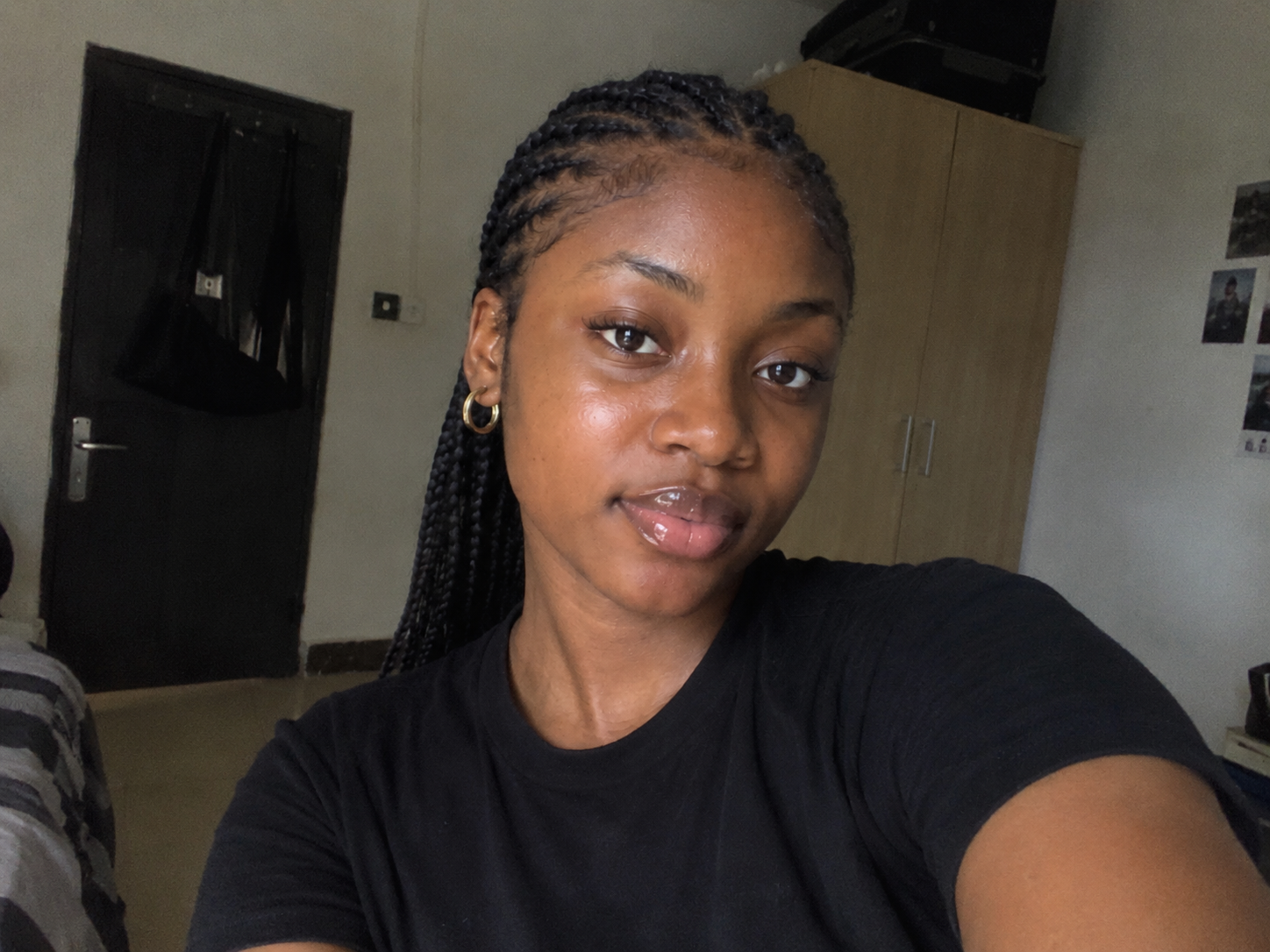
It’s 11:40pm. You’re on your bed, phone in hand, scrolling job posts again.
“Must have portfolio with real client work.”
You close it. Open the next one. Same line.
You’ve been learning design for almost a year now. Canva first, then Figma, maybe some Illustrator on a borrowed laptop. You’re actually good now. You know you are.
But you still haven’t been paid. Not once.
You send the proposals anyway. Upwork. Fiverr. That Twitter thread where someone said “DM me if you design.” You write it carefully. You hit send.
Silence.
Then you open Twitter and there it is — someone your age, maybe younger: “Just closed my third client this month. God is good.” Two hundred likes.
What do they have that I don’t?
You tell yourself it’s the portfolio. Once you have real work, people will take you seriously. But nobody gives you real work because you have no real work. Round and round.
Meanwhile your mum asks, gently, if “this design thing” is bringing anything in yet. You say “soon.” You’ve said “soon” for months.
I know this loop because Tomiwa lived in it for almost a year. Here’s what changed it for her — in her own words.
My name is Tomiwa. I’m 20, I live in Lagos, and I taught myself design on my phone.
I started because I saw people online making money from it, and honestly, because I needed to make some money myself. I watched YouTube tutorials at night when the data was cheaper. I did the free Figma course. I designed fake flyers for fake restaurants and posted them, hoping someone would notice.
Nobody noticed.
For about ten months, I applied to design gigs almost every single night. Upwork, Fiverr, Twitter, WhatsApp groups. I probably sent over a hundred proposals. I got two replies in total. One asked for my “client portfolio.” The other wanted a full brand identity for “exposure.”
I remember thinking: maybe I’m just not good enough yet.
So I worked harder on my skills. I got better. It didn’t change anything.
Random Upwork and Fiverr proposals. I copied the “winning proposal” templates from YouTube. I was competing against people with 200 reviews. My proposal was one of sixty. I got ignored, and honestly, I understand why.
Cold-DMing small businesses and offering free work. I thought “free” would at least get me a yes. Most people didn’t reply. Two people said yes, took the designs, and disappeared. No testimonial, no post, nothing. Free work made me look less valuable, not more.
Building a mock portfolio of concept projects. I spent weeks on a rebrand for a fictional coffee brand. It looked nice. But when I showed it to a real business owner, she asked, “So who was the client?” When I said it was a concept, she lost interest immediately.
Asking friends and family for referrals. My aunt connected me with someone at her church who needed a flyer. I did it for free “as a favour.” That was the end of that.
Buying a “get clients fast” PDF. This one hurt. I used money I didn’t really have. It said things like “post consistently,” “be confident,” “know your worth.” Advice I’d already heard a hundred times, written for someone who already had a portfolio and just needed motivation. I didn’t need motivation. I needed a first step that worked for someone with nothing.
After that PDF, I was angry. Not at the writer — at the whole situation. I sat with my phone and asked myself one honest question:
Why did that business owner actually say no to me?
It wasn’t because my work was bad. She barely looked at it. She said no because saying yes to me felt risky. She didn’t know if I’d deliver. She didn’t know if I understood her business. A concept coffee brand didn’t tell her anything about her problem.
That’s when I understood the thing that changed everything for me:
Clients don’t hire the best designer. They hire the designer who makes them feel safest saying yes.
My blocker was never skill or experience. It was strategy. Every move I’d made was designed to show off my design. None of it was designed to make a specific person feel safe.
I stopped applying to jobs. Completely. Instead, I did three things.
First, I picked one real business. Not a fictional one. A small skincare brand I actually followed on Instagram. I looked at their page like a customer and wrote down what was actually hurting them — inconsistent posts, no clear price list, a WhatsApp catalogue that looked like a screenshot of a screenshot.
Then I built a “proof piece” for them. Not a whole rebrand. One afternoon, on my phone: a clean price list graphic and three post templates in their existing colours, fixing the exact problems I’d written down. It looked like real client work because it was solving a real business’s real problem.
Then I made a list of what I now call the “Warm 10.” Ten people who were the most likely to say yes to someone with no portfolio — not big brands, not Upwork strangers. Specific types of people: small vendors already spending money on Instagram ads but with weak visuals, people who’d recently posted “we need a designer” then gone quiet, businesses whose competitors looked noticeably better than they did. I’ll be honest — figuring out which types of people belong on that list took me the longest, and it’s the part I’m most careful to spell out in the guide.
I sent the skincare owner a DM. Not “Hi, I’m a designer, do you need designs?” I led with what I’d noticed about her page, attached the proof piece, and said I’d made it while studying her brand. No pitch yet. Just insight and proof.
She replied in under an hour.
“Wait, you made this for me? How much do you charge?”
I nearly dropped my phone.
I followed up twice over the next week — short, friendly, not begging. On day 12 she paid a deposit for a full month of post templates and a new catalogue. My first paying client. Fourteen days after I stopped applying to jobs.
The day I got paid, I did something I’d never thought to do before: I asked for a testimonial and a referral immediately, while she was still excited. She sent a voice note I still have, and tagged me in a post. A friend of hers who sells hair DMed me the same week. Client number two didn’t come from starting over. It came from client number one.
At the end of that month, I handed my mum some money for the house, like I sometimes did from odd jobs. She looked at it and asked where it came from. I said, “A client. She found me on Instagram.”
She didn’t say much. But she looked at me differently. That was the moment it felt real.
Over the following months I kept refining it — testing which DM openings got replies, which follow-ups got ignored, which kinds of businesses said yes fastest. I wasted a lot of time and a lot of data doing that. If I add up the hours, it’s easily worth over ₦150,000 of my time in trial and error.
When I told Jason the story, he asked if I’d ever written the steps down. I hadn’t. Then I remembered that useless PDF I’d bought at my lowest point — and how badly I’d wanted something that was actually built for someone starting from zero.
So we built that.
This is not a “mindset” guide. It’s the exact 3-phase plan Tomiwa used, written out step by step so you can follow it with just your phone:
UNDERSTAND — why clients really say yes (and why your blocker was never your skill).
ACT — pick a real business, build your proof piece, find your Warm 10, send the No-Portfolio Pitch, follow up without sounding pushy.
SUSTAIN — turn client #1 into client #2 automatically with the testimonial and referral script.
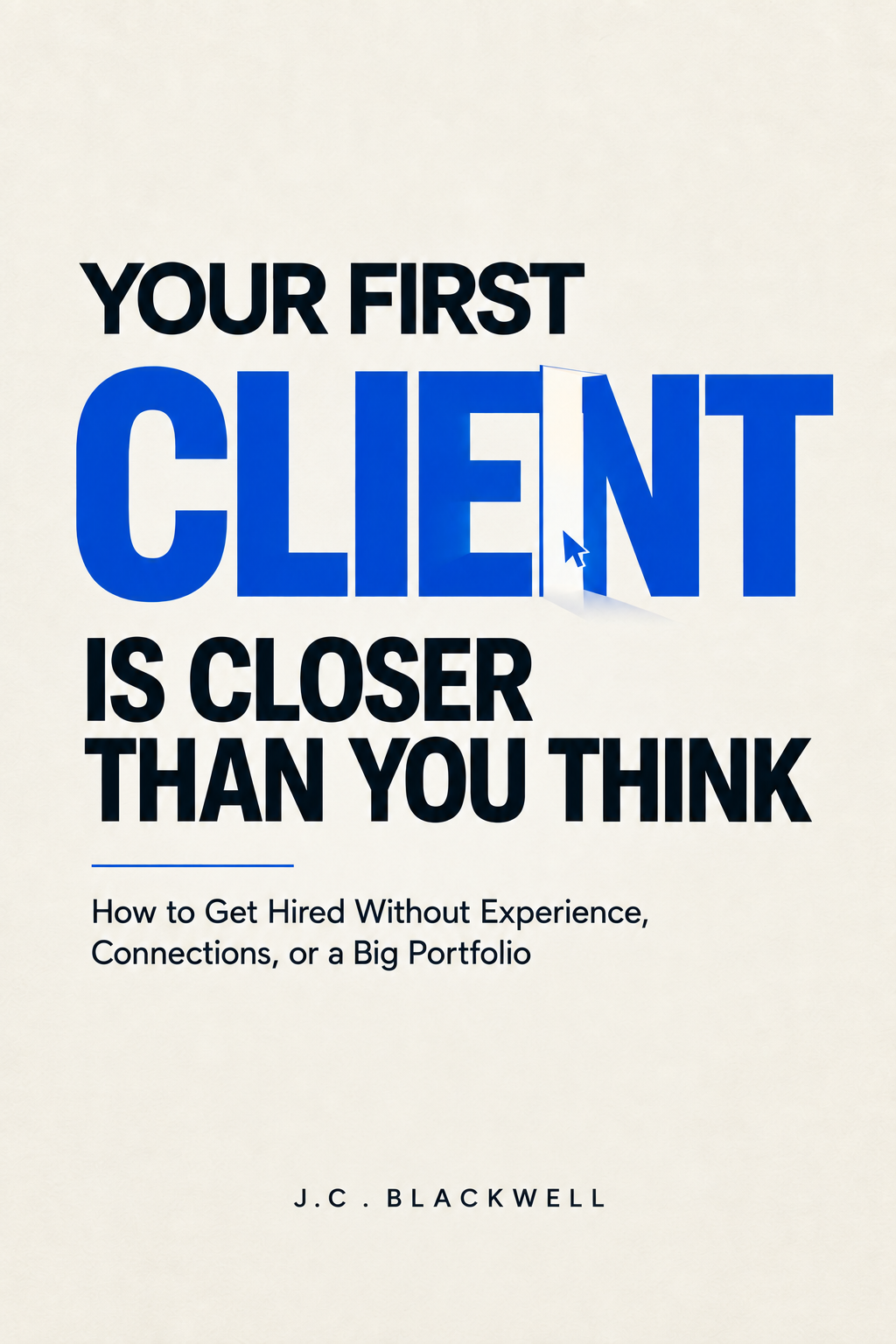
Here’s the honest version. Everything in this guide came from months of real outreach, testing pitches that got ignored, proof pieces that fell flat, follow-ups that were too pushy — until the version that worked emerged. The time Tomiwa spent figuring it out is easily worth ₦150,000 in hours alone, never mind the data.
You’re not paying for that. You’re paying for the shortcut: the worksheet, the templates and the scripts, so your first attempt looks like her fourteenth.
The planned price for the guide is ₦9,000. For this launch, it’s half that.
One-time payment · Instant PDF download · Read on your phone
Secure checkout via Selar. Delivered instantly to your email.
The guide is complete on its own. These two extras just remove the two most common places people stall: not knowing what to say, and not knowing who to build for.
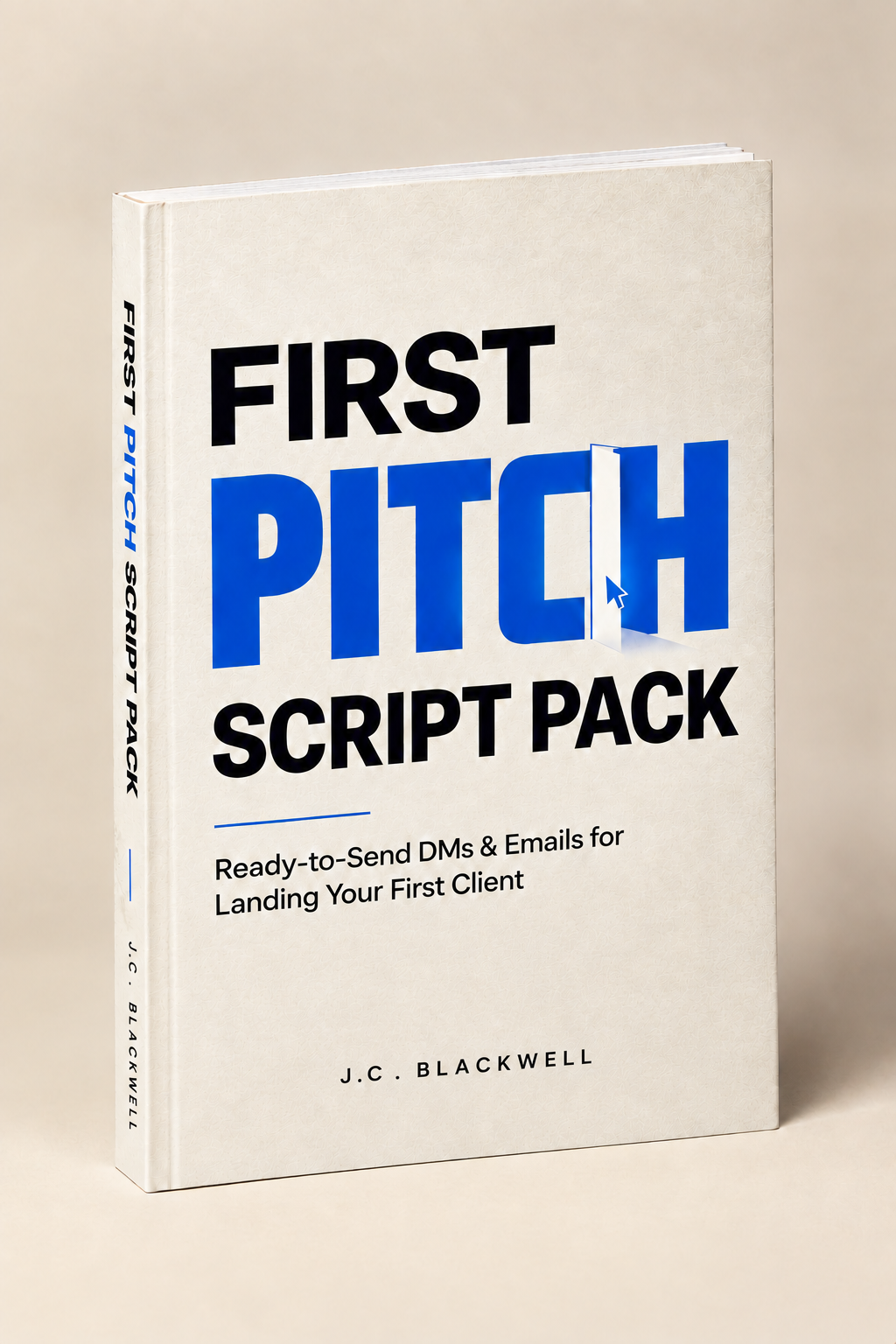
Extra ready-to-send DM and email variations for different kinds of businesses — food vendors, fashion and hair sellers, skincare brands, small service businesses — so you’re never staring at a blank message box.
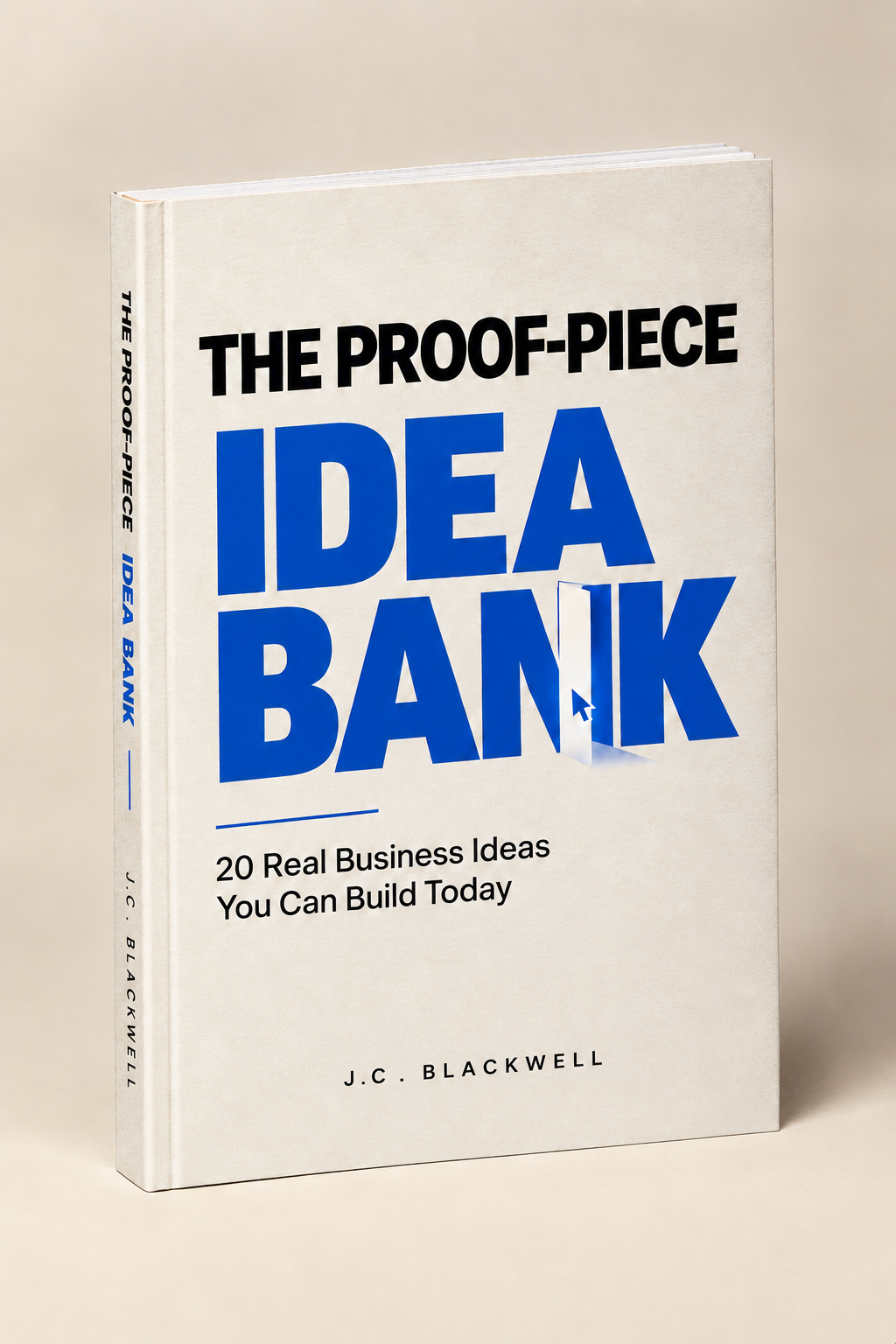
20 real business types you can build a proof piece around today, with the specific problem to solve for each one. No waiting for inspiration.
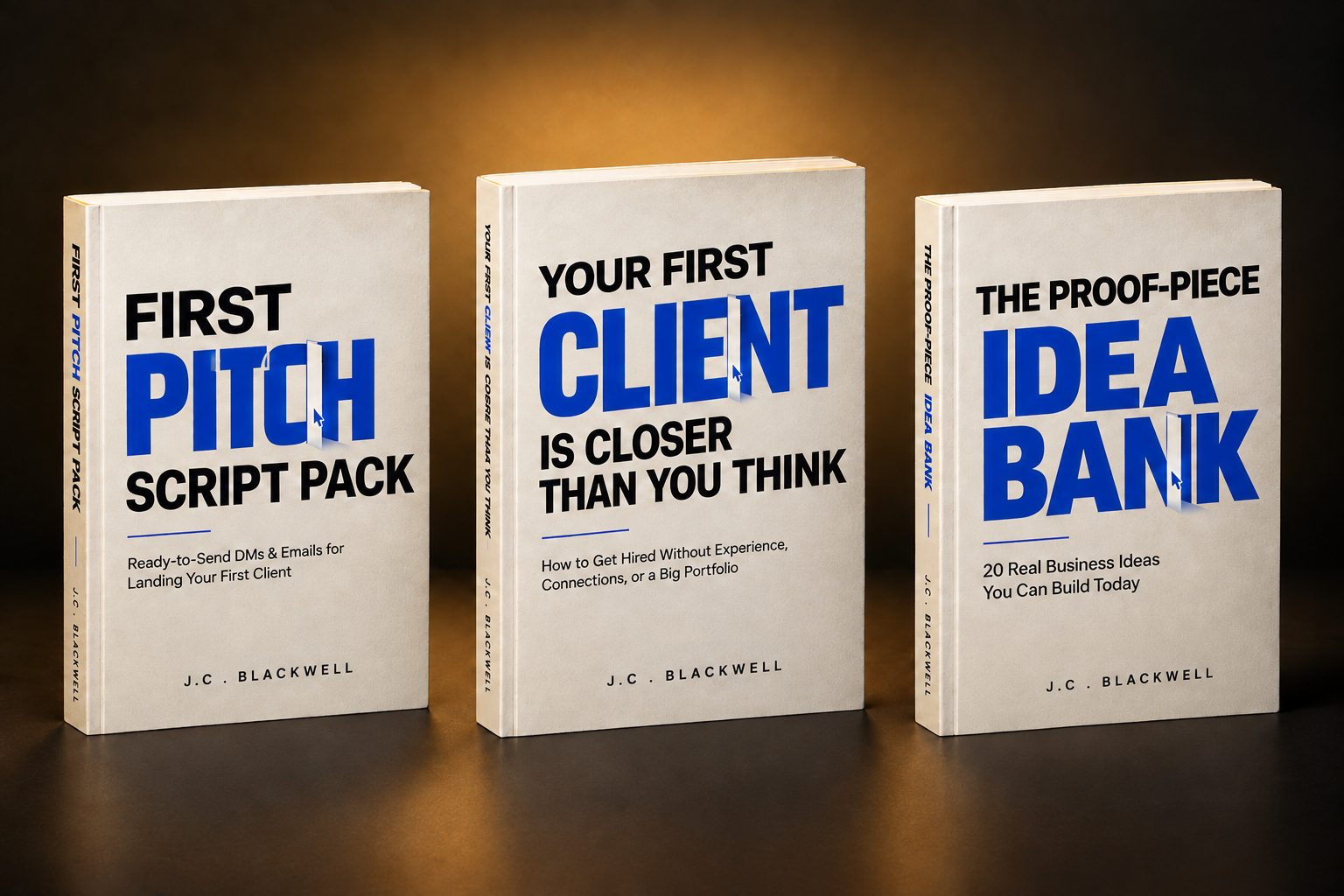 Get the Guide + Bonuses for ₦4,500 →
Both bonuses are delivered with the guide, at no extra cost.
This guide is built to get you moving, not to sit in your downloads folder. So here’s the deal, plainly:
Follow the step plan with just your phone and one afternoon. If you don’t have your proof piece built and your first pitch sent within 24 hours, email us and you’ll get a full refund.
No forms, no questions about whether you “really tried.” If the plan didn’t get you to your first move in a day, it didn’t do its job, and you shouldn’t pay for it.
Start Today — Risk-Free for 24 Hours →You don’t need another year of learning. You don’t need a laptop, a mentor, or a cousin who knows somebody.
You need one real business, one proof piece, one list of ten warm people, and one message that makes someone feel safe saying yes. That’s the whole thing. Tomiwa did it in fourteen days from her bed in Lagos, and the only tool she used is already in your hand.
If you follow the plan, here’s what changes: you stop refreshing job boards at midnight. You have a pitch out in the world within a day. You have a real conversation with a real business owner within the week. And the next time someone asks whether “this design thing” is bringing anything in, you have an answer.
That’s the invitation. Whether you take it is completely up to you — but your first client really is closer than you think.
— Jason
Yes — Get My Copy for ₦4,500 →Instant download · Includes both bonuses · 24-Hour First Move Guarantee